
Children’s eyes are not simply smaller versions of adult eyes — they are actively developing, rapidly changing, and surprisingly vulnerable to conditions that, if left untreated, can cause permanent vision loss. Yet eye health remains one of the most overlooked aspects of child healthcare in India, particularly in smaller cities and semi-urban districts like Buldhana.
At Bhakti Netralaya, Malkapur’s super speciality eye hospital, Dr. Priti Patil — M.B.B.S., M.S., FPOS — is one of the region’s few fellowship-trained paediatric ophthalmologists. In this detailed guide, Dr. Patil answers the most common and most important questions parents ask about their children’s eyes — from warning signs and spectacles to squint surgery and screen time.
Who Is a Paediatric Ophthalmologist and Why Does My Child Need One?
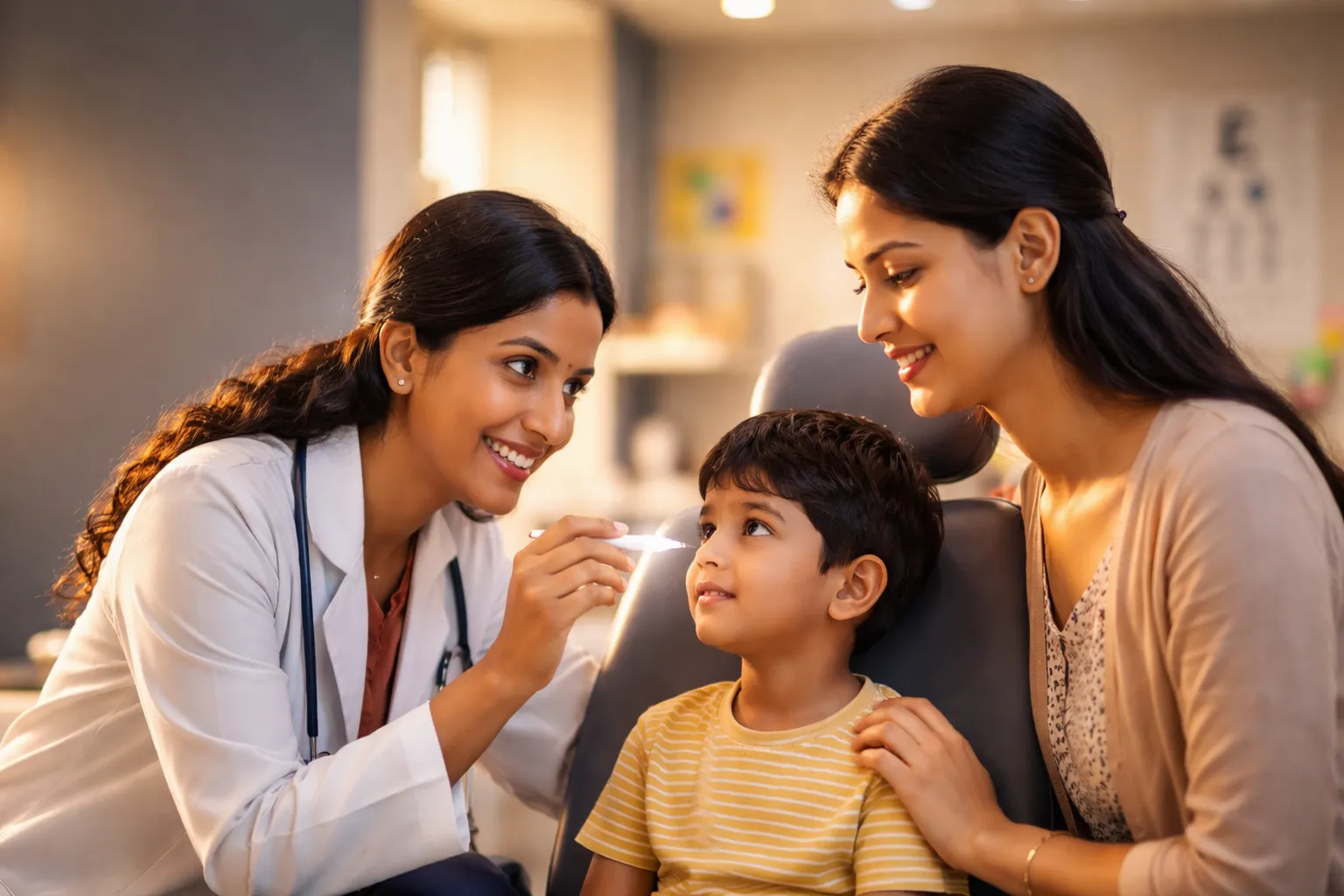
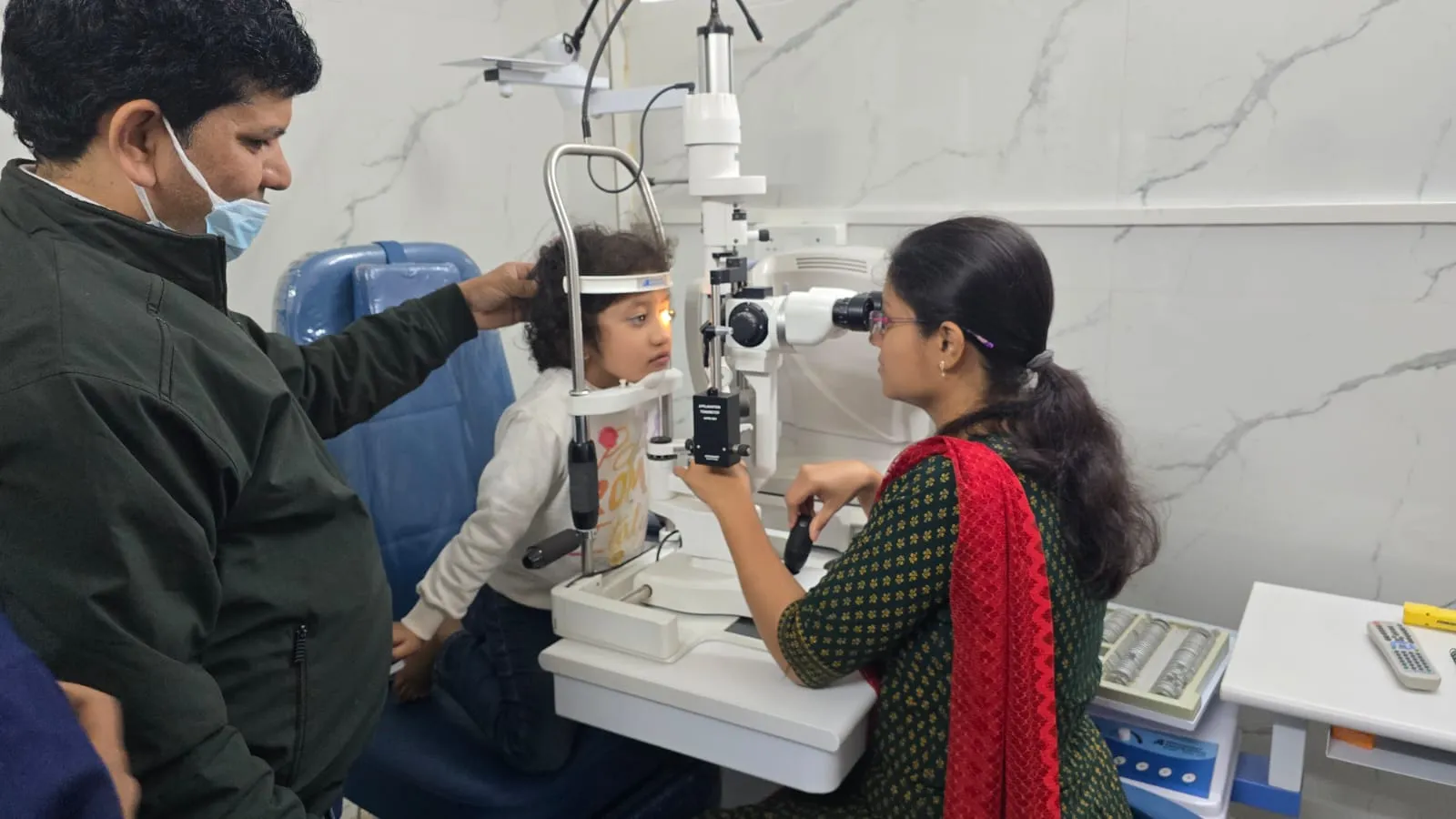
A paediatric ophthalmologist is an eye surgeon who has received specialised training in diagnosing and treating eye conditions that specifically affect infants, children, and teenagers. This is different from a general eye doctor — paediatric ophthalmologists understand child development, know how to examine children who cannot read an eye chart, and are trained in the unique surgical techniques required for young, developing eyes.
Dr. Priti Patil explains:
“Children cannot always tell you that they cannot see clearly. They adapt. They compensate. They assume everyone sees the world the way they do. That is why specialised paediatric eye assessment is so important — because we are trained to find problems that children themselves do not know they have.”
Q1. At What Age Should a Child Have Their First Eye Examination?
This is the most frequently asked question — and the answer surprises most parents.
A child’s first eye examination should happen within the first year of life, ideally between 6 and 12 months of age. A second examination is recommended between ages 3 and 4, and then annually once the child starts school.
Many eye conditions — including congenital cataracts, glaucoma, and retinoblastoma (eye cancer in children) — are present from birth or develop in the first few months of life. Early detection is the single most important factor in determining outcomes.
Key milestones parents should monitor:
- By 6 weeks — baby should be able to fix and follow a face or light
- By 3 months — eyes should move together, no wandering
- By 6 months — no squinting, no white reflection in the pupil
- By 1 year — reaching for objects accurately, good hand-eye coordination
Q2. What Are the Warning Signs of an Eye Problem in Children?
Dr. Patil emphasises that parents should never wait for obvious symptoms before seeking an eye evaluation. However, the following signs should prompt an immediate consultation:
In Infants:
- White or yellowish glow in the pupil (leukocoria) — a potential sign of cataract or retinoblastoma
- One or both eyes that appear to wander or turn inward or outward
- Excessive tearing without infection
- Unusual sensitivity to light
- Eyes that flutter or move rapidly and uncontrollably (nystagmus)
In Toddlers and Young Children:
- Squinting or closing one eye in bright light
- Tilting the head to one side to look at things
- Sitting too close to the television
- Rubbing eyes frequently
- Delayed reaching or clumsiness suggesting poor depth perception
In School-Age Children:
- Complaints of headaches, especially after reading
- Losing their place while reading
- Avoiding reading or near work
- Poor performance in school despite good intelligence
- Difficulty seeing the blackboard from the back of the class
Q3. What Is a Squint (Strabismus) and Can It Be Treated?
Squint — medically known as strabismus — is a condition where both eyes do not look in the same direction at the same time. One eye may turn inward (esotropia), outward (exotropia), upward, or downward.
Squint is more common than most parents realise — affecting approximately 2–4% of children. It is not something a child will “grow out of.” Left untreated, squint leads to amblyopia (lazy eye) and permanent loss of binocular vision and depth perception.
Treatment options include:
- Spectacle correction — many squints are caused by an uncorrected refractive error and resolve with the right glasses
- Patching therapy — covering the stronger eye to stimulate the weaker eye
- Botulinum toxin injection — in select cases
- Squint surgery — a precise, safe procedure to realign the eye muscles, performed under general anaesthesia in children
Dr. Patil clarifies a common myth:
“Many parents think squint surgery is dangerous or that it should be delayed. In fact, the earlier we correct squint — especially in young children — the better the outcome. Surgery before the age of 4 gives the best chance of achieving normal binocular vision.”
Q4. What Is Amblyopia (Lazy Eye) and Is It Reversible?
Amblyopia — commonly called lazy eye — is a condition where one eye develops reduced vision because the brain begins to favour the other eye. The eye itself may appear completely normal, but the brain has essentially “switched it off.”
Causes of amblyopia include:
- Uncorrected refractive error in one eye (the most common cause)
- Squint — the brain ignores the turned eye to avoid double vision
- Congenital cataract or ptosis (droopy eyelid) blocking vision in early childhood
The critical window for treatment is before age 7–8 — while the visual cortex of the brain is still developing and can be retrained. After this age, amblyopia becomes increasingly difficult — and eventually impossible — to reverse.
Treatment involves:
- Prescribing the correct spectacles
- Patching the good eye for a prescribed number of hours daily
- In some cases, atropine drops to blur the good eye
- Treating the underlying cause (surgery for cataract or squint)
Q5. My Child Has Been Prescribed Glasses — Do They Really Need Them?
Yes — and children should wear their prescribed spectacles consistently and without interruption.
In adults, spectacles are primarily a comfort — they help you see more clearly. In children, spectacles are a medical treatment. An uncorrected refractive error in a child is not just inconvenient — it can cause permanent amblyopia (lazy eye) if left uncorrected during the critical developmental years.
Common refractive errors in children:
- Myopia (short-sightedness) — difficulty seeing the board at school, sitting close to the TV
- Hyperopia (long-sightedness) — may cause eye strain, headaches, and squint
- Astigmatism — blurred vision at all distances, often causes head tilting
- Anisometropia — different power in each eye, a major cause of amblyopia
Dr. Patil’s advice to parents:
“When your child’s ophthalmologist prescribes glasses, please do not reduce the power or take them off because the child complains. The discomfort is temporary — the vision loss from not wearing glasses can be permanent.”
Q6. Is Too Much Screen Time Damaging My Child’s Eyes?
This is one of the most asked questions in Dr. Patil’s clinic today — and for good reason.
The evidence is clear — excessive screen time is directly associated with:
- Myopia progression — children spending more time indoors on screens are developing short-sightedness at dramatically higher rates
- Digital eye strain — dry eyes, headaches, blurred vision after prolonged screen use
- Reduced outdoor time — natural light exposure is a proven protective factor against myopia
Evidence-based screen time guidelines:
- Under 2 years — no screen time except video calls
- Ages 2–5 — maximum 1 hour per day of high-quality content
- Ages 6 and above — consistent limits with breaks every 20 minutes
The 20-20-20 rule — every 20 minutes, look at something 20 feet away for 20 seconds — is recommended for all school-age children using screens.
Outdoor time is protective — at least 1–2 hours of outdoor activity daily has been shown in multiple studies to slow myopia progression in children.
Q7. What Is Paediatric Cataract and How Is It Treated?
Cataract is not just a condition of the elderly. Congenital cataract — present from birth — and developmental cataract — appearing in childhood — are serious conditions requiring urgent treatment.
A cataract in a child’s eye, if untreated, will cause profound amblyopia within weeks to months because the developing visual brain needs a clear image to develop properly.
Treatment is surgical — the cloudy lens is removed and, depending on the child’s age, an intraocular lens may be implanted. Post-operatively, optical correction and amblyopia treatment are critical.
The urgency of paediatric cataract cannot be overstated — a delay of even a few weeks in a newborn can mean the difference between functional vision and permanent visual impairment.
Q8. What Is Retinoblastoma and How Do I Know If My Child Has It?
Retinoblastoma is the most common eye cancer in children, typically affecting children under 5 years of age. It can affect one or both eyes.
The most important warning sign is leukocoria — a white glow or white reflection visible in the pupil, often first noticed in photographs when one eye does not show the normal red-eye reflection but instead appears white or yellowish.
Other signs include:
- A visible squint that appears suddenly
- Red, painful eye
- Poor vision in one eye
- Eye appearing larger than normal
Retinoblastoma is treatable — but only if caught early. Treatment may include laser therapy, chemotherapy, cryotherapy, or in advanced cases, removal of the eye. Early diagnosis is life-saving.
Dr. Patil urges:
“If you ever notice a white glow in your child’s eye in a photograph, do not dismiss it. Come to us immediately. It could be nothing — or it could be everything.”
Q9. When Should a Child Have Squint Surgery vs. Non-Surgical Treatment?
Not every squint requires surgery — but many do. The decision depends on:
- Type and angle of squint — large-angle squints almost always require surgery
- Age of the child — earlier surgery gives better results
- Whether glasses have corrected the squint — accommodative esotropia often resolves with spectacles alone
- Presence of amblyopia — amblyopia must be treated before or alongside squint surgery
Surgery realigns the extraocular muscles to straighten the eye. It is performed under general anaesthesia, is safe, and children typically recover within a few days.
Why Choose Bhakti Netralaya for Your Child’s Eye Care?
At Bhakti Netralaya in Malkapur, Dr. Priti Patil brings fellowship-level paediatric ophthalmology expertise — including FPOS (Fellowship in Paediatric Ophthalmology and Strabismus) — to the families of Malkapur, Burhanpur, and the entire Buldhana district.
What sets us apart:
- Dedicated paediatric eye OPD — designed to be child-friendly and stress-free
- Specialised cycloplegic refraction for accurate children’s spectacle prescription
- Squint assessment and surgical correction
- Paediatric cataract diagnosis and surgery
- Amblyopia screening and treatment programmes
- Vision screening for school-age children
Dr. Priti Patil’s OPD at Bhakti Netralaya, Malkapur:
📅 2nd and 4th Monday of every month 🕙 10:00 AM – 4:00 PM 📞 92096 57063 / 83848 47869
Dr. Priti Patil’s OPD at Bhakti Netralaya, Burhanpur, Madhya Pradesh:
📅 All day 🕙 10:00 AM – 4:00 PM 📞 92096 57063 / 83848 47869
Final Word from Dr. Priti Patil
“Your child’s eyes are their window to the world — to learning, to playing, to growing. Do not wait for obvious signs before bringing them for an eye check. The earlier we find a problem, the more completely we can fix it. At Bhakti Netralaya, we are here — right in your city — to make sure every child in our community has the gift of clear, healthy vision.”
📍 Bhakti Netralaya — Super Speciality Eye Hospital Ganesh Nagar, near Bhadru Mandal, Malkapur, District Buldhana 📞 92096 57063 | 83848 47869
📍 Bhakti Netralaya — Super Speciality Eye Hospital Amravati Road, Sanjay Nagar, Burhanpur, Madhya Pradesh, India 📞 92096 57063 | 83848 47869